Built heritage · United Kingdom

Durham Castle

Clock Tower · UNESCO World Heritage

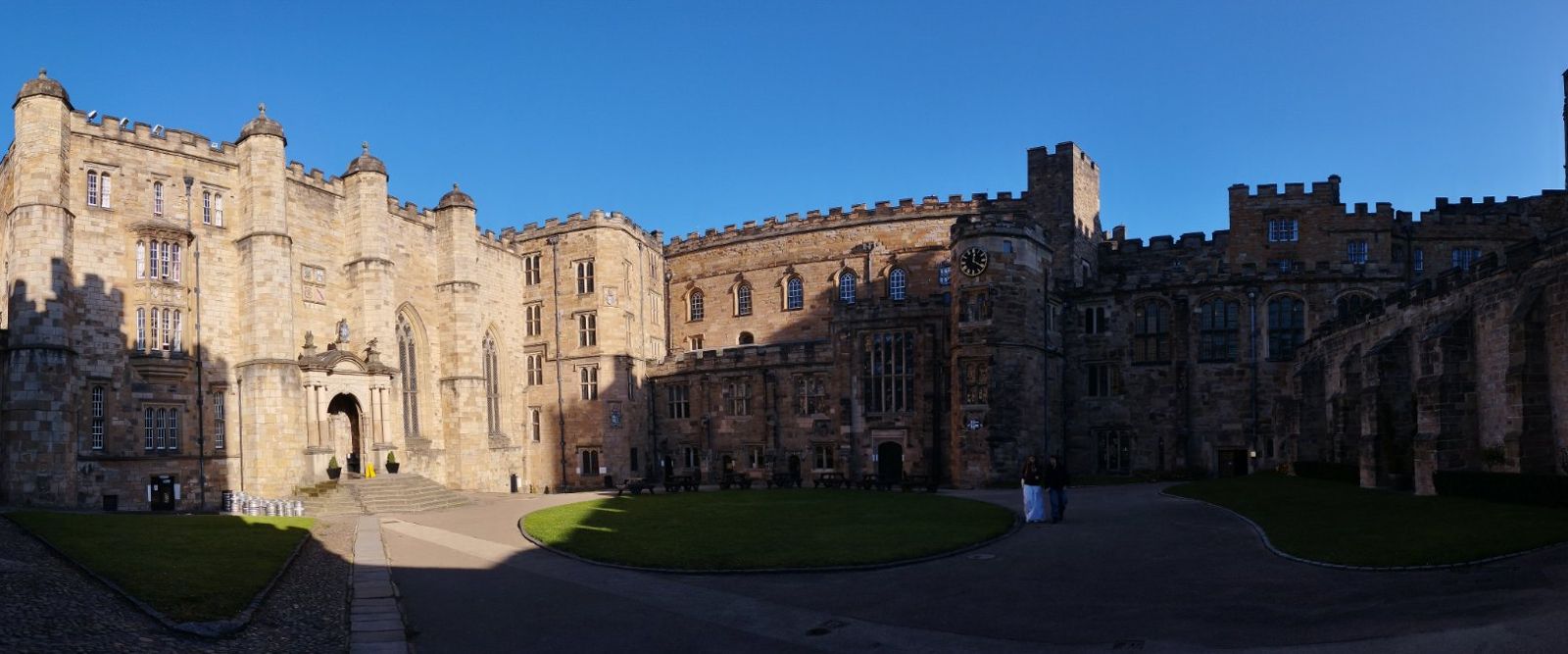
Durham Castle courtyard
The castle courtyard. Photo: Giuseppe Occhipinti.
01

Knowing

Durham Castle is part of the Durham Castle and Cathedral UNESCO World Heritage Site, inscribed in 1986. Begun in 1072 and transformed many times over the centuries, it now has a complex and irregular layout; since 1837 it has housed a college of Durham University and is open to visitors. Its stone masonry shows alveolar erosion, cracks around openings and deteriorated joints.

The study was carried out within the international WRENCH project (Whispers of Time: Heritage as Narratives of Climate Change), with INGV and Durham University. The goals: build an integrated geometric and vibration dataset for future models and monitoring, and check whether the new ultra-low-noise QMEMS accelerometers can measure the very weak vibrations typical of historic buildings.
02

Measuring

The west and north wings were surveyed with a terrestrial laser scanner (Leica BLK360), on the courtyard and inside: the Great Hall, Tunstall Gallery, Norman Chapel and Clock Tower. Scans were taken with the sensors already installed, so their positions are known in the same reference system as the point cloud; registration errors are between 1 and 5 mm.

Ambient vibrations were recorded with eleven GNSS-synchronised Smart Sensor Boxes, with no cables between points, including measurements at ground level to investigate soil-structure interaction. The main campaign covered 25 points in four layouts. A dedicated layout instrumented the Clock Tower from the ground floor to the clock chamber: six stations with the new Epson M-A370 accelerometer and two with the earlier M-A352, recorded for 14 hours and analysed in 14 one-hour segments.

Placed side by side, the M-A370 sensors show a lower noise floor than the M-A352, especially between 1 and 10 Hz, the band that matters for this structure.

03

Modelling

The tower frequencies were identified with the SSI-UPC method in each of the 14 segments. Three criteria were used to separate physical modes from spurious ones: repeatability across segments, modal complexity (10% and 5% thresholds) and the correlation of frequencies with the measured temperature.

Clock Tower frequencies identified consistently.
Mean frequency [Hz]SegmentsCriterion met
5.4514 of 14Complexity < 5%
7.79≥ 12 of 14Complexity < 5%
8.09≥ 12 of 14Complexity < 10%
8.47≥ 12 of 14Complexity < 10%

The 5.45 Hz mode shape was projected onto the laser-survey point cloud, so it can be read on the real geometry of the tower: it mainly involves the out-of-plane bending of the walls orthogonal to the north-west façade, with which the tower interacts.

04

Outcome

A baseline dynamic characterisation, with the sensors placed on the real geometry.

Four repeatable frequencies describe the tower: the 5.45 Hz mode was identified in all 14 hours with the lowest complexity; the 8.09 and 8.47 Hz modes probably involve the interaction with the rest of the castle. The lowest frequencies, around 3.3 Hz, are the most correlated with temperature and may depend on the foundations and soil-structure interaction: a topic for further study.

The test confirmed that M-A370 QMEMS accelerometers make it possible to analyse very weak ambient vibrations with a temporary, distributed network. The data from the full campaign will be used to calibrate numerical models and to set up long-term monitoring.

Images

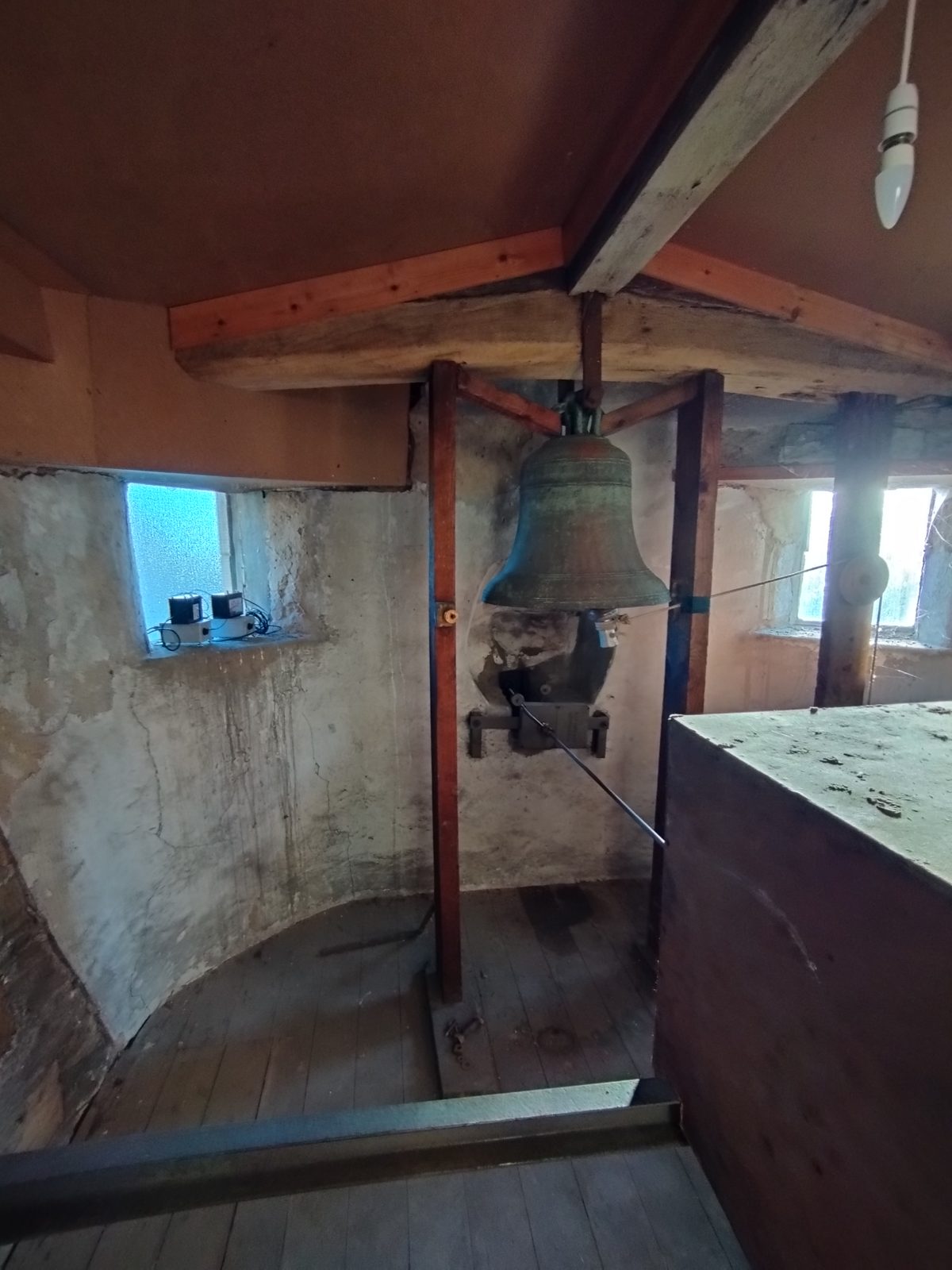
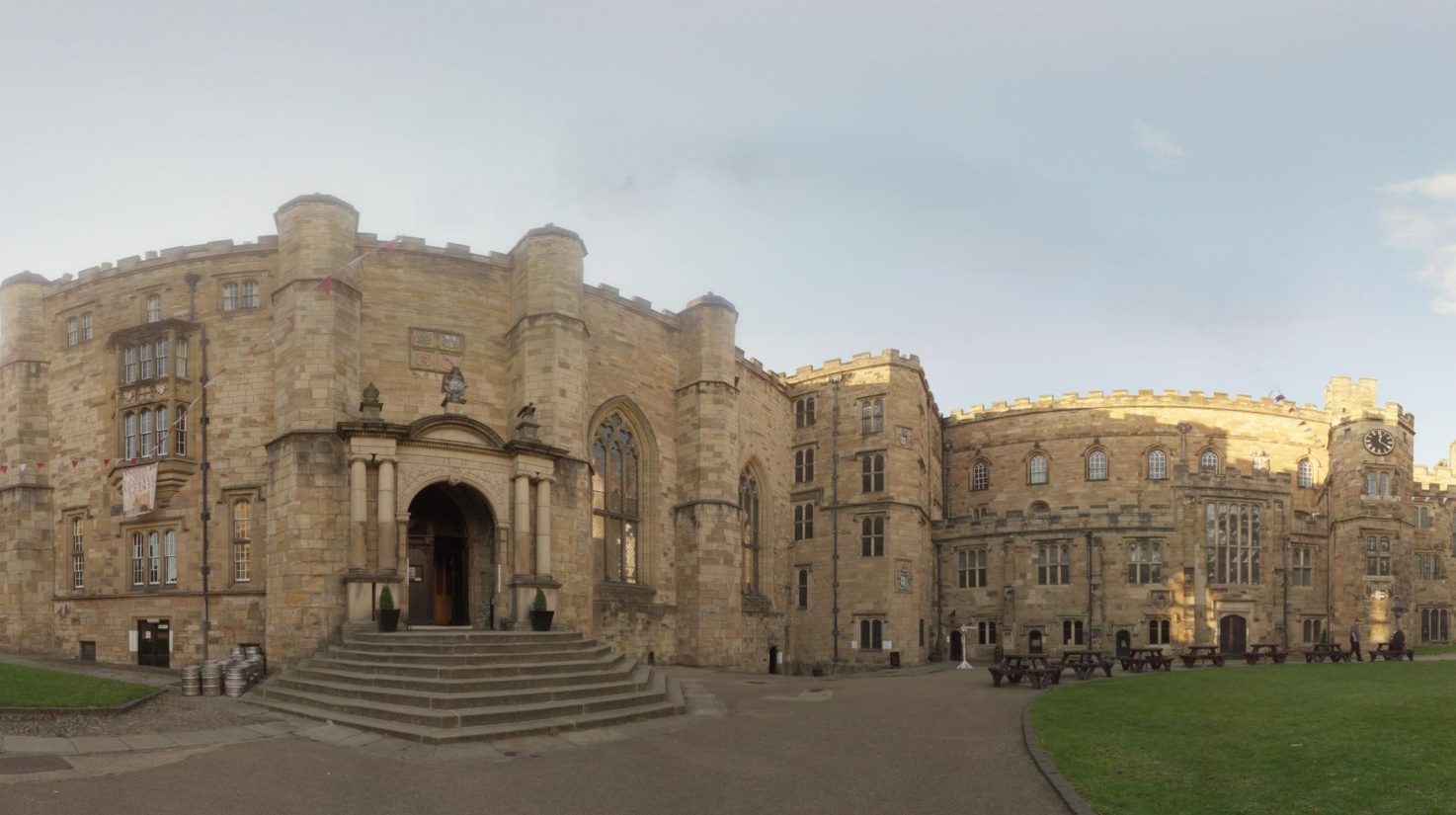
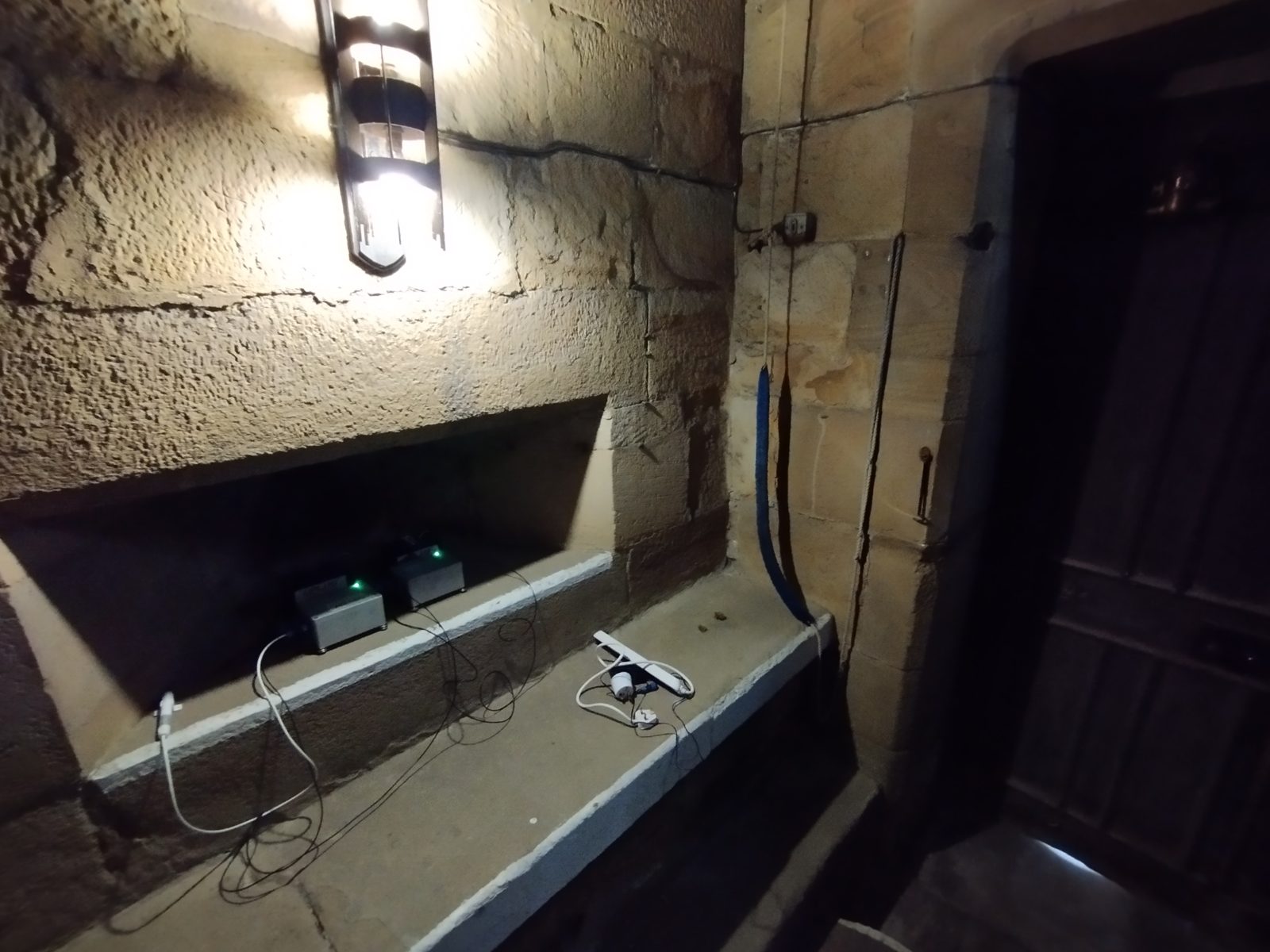
The castle elevations on the courtyard, with the Great Hall entrance A Smart Sensor Box installed in the tower The clock chamber, the highest instrumented level of the tower

Publications

  1. 2026QMEMS-based vibration measurements and digital survey techniques for cultural heritage conservation: the Durham Castle case study
    Patanè D., Martino C., Occhipinti G., Sicali A., Lodato L., Pantò B. Paper in preparation
  2. 2026Performance evaluation and field validation of next-generation QMEMS accelerometers for seismology, structural health monitoring, and impact-based earthquake early warning
    Patanè D., Todorokihara M., Fertitta G., Martino C., Occhipinti G., Sicali A., Sabella F. Sensors 26, 5528. DOI 10.3390/s26175528
  3. 2026World heritage historic construction as narratives of climate change: from historical to structural analyses
    Pappalardo G., Andreoni S., Armiero M., Chisari C., De Matteis G., Jansen A.C.Q., Iaderosa R., Iovane D., Occhipinti G., Osman A., Pantò B., Rennie G., Zizi M. SAHC 2025 · RILEM Bookseries 64, Springer. DOI 10.1007/978-3-032-13469-1_38

Contact

Tell us about your structure.

+39 339 5003643
info@giuseppeocchipinti.it
Via Ottorino Respighi 34
97100 Ragusa · Italy
VAT IT01335650881 · PEC giuseppe.occhipinti2@ingpec.euPrivacy · CookieVerba volant, data manent
Style